Representing Accident &
Injury Victims Since 1963
Injury Victims Since 1963
We Help Clients in All Parts of Injury and
Wrongful Death Claims
Wrongful Death Claims

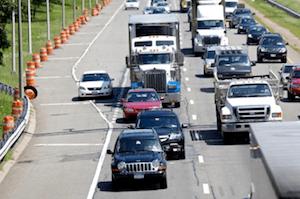
Miami traffic is dense, fast, and often unpredictable. On roads like I-95, SR 836 (Dolphin), SR 826 (Palmetto), and US-1, lane changes happen constantly. When one driver misjudges the space for another, a sideswipe can occur and escalate into a chain-reaction collision.
At Wolfson & Leon, we represent people injured in sideswipe and merging crashes across Miami-Dade. These cases may seem simple at first, but insurance carriers often vigorously dispute liability. If you were hurt in a sideswipe or merging car crash, call a Miami car accident lawyer today at 305-285-1115 for a free consultation.
Miami-Dade’s fatal crash rate is generally consistent with statewide Florida trends, but the county continues to experience exceptionally high crash and injury volumes due to dense traffic conditions, major highway corridors, and heavily traveled urban intersections. According to 2025 data from the Florida Department of Highway Safety and Motor Vehicles (FLHSMV) Traffic Crash Dashboard, the county recorded approximately 56,043 total crashes, resulting in 26,658 reported injuries and 275 fatalities.
Heavy congestion on highways, entrance ramps, exits, and multi-lane roadways contributes to a high number of lane-change and merging accidents throughout South Florida. These crashes are especially common when drivers rush to change lanes, fail to check blind spots, or attempt aggressive merges in dense traffic conditions. Florida transportation agencies specifically track lane-change collisions as a separate crash category, highlighting how significant these accidents have become statewide.
Miami-Dade’s Vision Zero safety initiatives have also emphasized the continuing risks posed by serious and fatal traffic crashes on local roads.
These wrecks can happen anywhere, but we repeatedly see them in high-volume merge zones and near major destination traffic:
Local context matters. A crash near a short merge lane, recurring bottleneck, or confusing ramp geometry often requires a detailed roadway analysis, not just a police narrative.
Most sideswipe cases come down to one or more of these factors:
Florida law provides a useful structure in sideswipe disputes:
Why this matters in real claims: Insurance carriers often argue “shared blame” in merge crashes. If fault is not thoroughly investigated, your payout can be substantially reduced. Early evidence collection is what protects value.
If you’ve been badly hurt and don’t know what to do after a Miami car accident, acting quickly can help protect both your health and your legal rights. The following steps can help preserve important evidence and strengthen a potential injury claim after a Miami accident:
If you need help now, call 305-285-1115.
In contested lane-change cases, proof wins. Our team focuses on evidence that can objectively establish fault:
| Disputed Issue | What Insurers Argue | Evidence We Use |
| “Both cars drifted” | Shared fault to reduce payout | Crush profile, paint transfer, scene measurements, event sequencing |
| “You were in my blind spot” | You assumed the risk | Traffic video, witness statements, lane position mapping |
| “No signal / late signal” | No negligence by other driver | Body cam, nearby camera footage, vehicle data, witness timing |
| “Impact was minor” | Injury not related | Prompt medical records, diagnostic imaging, treating-provider opinions |
| “You waited too long” | Treatment gap defense | 14-day compliance documentation and clear treatment timeline |
This is where experience matters. Sideswipe crashes are frequently undervalued until counsel forces a full liability and damages review.
Often, the driver who changes lanes unsafely is at fault. But each case depends on evidence such as lane position, speed, signaling, and witness/video evidence.
Yes. Florida comparative negligence rules allow fault to be split. That is exactly why early investigation is critical.
That does not automatically defeat your claim. Drivers still have a duty to change lanes only when it is safe to do so.
Potentially, yes, if your injuries meet Florida’s statutory threshold in auto cases.
In most negligence auto injury matters, the statute of limitations is 2 years.
If you were hurt in a lane-change or merging collision, do not let the insurance company define your case before the facts are fully developed. Wolfson & Leon helps clients across Miami-Dade build strong claims backed by evidence, medicine, and local litigation experience. Call 305-285-1115 for your confidential, free consultation.