Representing Accident &
Injury Victims Since 1963
Injury Victims Since 1963
We Help Clients in All Parts of Injury and
Wrongful Death Claims
Wrongful Death Claims

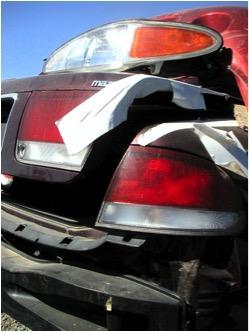
Rear-end collisions are a daily reality in Miami traffic. They happen on I-95 during sudden slowdowns, on SR-826 where traffic compresses fast, and on local corridors like US-1, Bird Road, Kendall Drive, and Le Jeune Road, where stop-and-go driving is constant. Even a crash that looks minor at first can lead to painful injuries, missed work, and long insurance disputes.
At Wolfson & Leon, we built this guide to answer the questions people actually ask after a rear-end crash in Miami: what causes these accidents, who is legally responsible, what to do in the first 24 hours, and how Florida law affects your claim. If you were hurt in a rear-end crash, call a Miami car accident lawyer at 305-285-1115 for a free consultation.
Rear-end collisions remain one of the most common types of traffic accidents in the United States. According to recent National Highway Traffic Safety Administration (NHTSA) trend data, rear-end crashes increased from approximately 1.69 million crashes in 2022 to nearly 1.75 million crashes in 2023 – an increase of about 3.7%. Injury-related rear-end crashes also rose slightly during that same period, while fatal rear-end crashes declined modestly. These trends show that even when a rear-end collision initially appears minor, the crash can still result in significant injuries, ongoing medical treatment, and long-term complications.
Because symptoms such as neck injuries, back injuries, and concussions may not fully appear until hours or days later, rear-end crashes should always be evaluated carefully after an accident. NHTSA crash statistics and traffic safety data are available through the agency’s official crash reporting and analysis tools.
Rear-end crashes usually come down to reaction time, following distance, and roadway conditions. In real cases, we often see several causes at once.
Florida law requires motorists to maintain a reasonable and prudent following distance. When drivers leave too little space, they cannot stop in time when traffic brakes suddenly.
Texting and similar manual phone use while driving remain major causes of rear-end collisions. A few seconds looking down is enough to miss stopped traffic ahead.
Hard acceleration followed by sudden braking is common on expressways and feeder roads. That driving pattern dramatically increases the risk of rear-end collisions.
Alcohol and drug impairment slows reaction time and decision-making, which is especially dangerous in dense urban traffic.
South Florida rain can drastically change road grip. Wet pavement lengthens stopping distances, particularly for drivers already following too closely.
Unexpected merges, temporary barriers, and sudden speed changes can trigger chain reactions when traffic is heavy.
Many believe the rear driver is always at fault. While this is often true, there are exceptions.
Here is the practical legal framework:
| Issue | Why it matters |
| Following distance duty | Tailgating supports negligence arguments. |
| Comparative fault | Fault can be split among drivers based on evidence. |
| More than 50% fault | In most negligence actions, a party found greater than 50% at fault cannot recover damages. |
Florida’s comparative fault statute is critical in multi-vehicle and chain-reaction crashes, where each impact may need separate analysis.
When the rear driver may not be 100% responsible
This is why evidence collection matters immediately after the crash.
Need help with fault analysis in a Miami rear-end crash?
Don’t wait to understand your legal options. Call 305-285-1115 now and speak directly with the Wolfson & Leon team.
Rear-end collisions frequently injure the neck, back, shoulders, and head. Some symptoms appear right away, while others worsen over 24 to 72 hours.
Common injuries include:
Early treatment protects your health and helps accurately document injury progression.
Use this checklist to protect your medical recovery and legal claim after a Miami car accident:
Under Florida PIP law, timing is important. Initial medical services generally must begin within 14 days to access key PIP benefits.
Depending on the facts and injury severity, a rear-end claim may include:
Florida’s motor vehicle tort threshold sets the legal standard for recovering non-economic damages (such as pain and suffering) in many accident claims.
Two rules create problems for many people who wait too long:
Don’t wait! Evidence can fade fast, and deadlines can narrow your options quickly.
At Wolfson & Leon, most rear-end cases move through three phases:
If you want a clear roadmap for your specific case, call 305-285-1115.
Rear-end cases can look simple to insurers, but they are often medically and legally complex. Our job is to make sure your case is fully developed before valuation and negotiation.
Not always. Rear-driver fault is common, but chain-reaction mechanics, unsafe merges, and shared negligence can change fault allocation.
Possibly yes. Florida uses comparative fault, but a party found greater than 50% at fault in most negligence actions cannot recover damages.
For most negligence-based injury actions, Florida’s deadline is 2 years.
Yes. Fast treatment protects your health and supports your claim. It also affects PIP eligibility timelines.
In many Florida auto cases, you must satisfy the statutory injury threshold to pursue non-economic damages.
If you were injured in a rear-end crash in Miami, act now. Speak with Wolfson & Leon at 305-285-1115 for your free consultation today.